
The time when you walk into someone’s home and without saying anything. A room tells you everything about them comes after the living room. This is because the living room serves many purposes for you. It is the first place where you settle down. The place where you stay until the end of your visit. And it is the only room in your entire house which must accomplish all its purposes all at once. From experience in this field, I can say that creating a truly cozy room comes down to making thoughtful decisions in the right sequence.
Most people usually begin with the choice of furniture. That is incorrect.
Start With What the Room Needs to Do, Not What It Needs to Look Like
Before you even purchase any furniture and before you even decide what color to paint. Sit down and realistically think about what this room is going to do every single day. Will it be used as the hub for the family? Will it serve as the reading room? And Will the house be frequented by guests? Depending on the answer, you would approach the task of designing the living room in different ways.
Consider this example. Just imagine yourself creating a water purification station. Would you purchase an entire house reverse osmosis system. Before you have gotten tested for the level of contaminants in your water? It just does not work this way. In order to create your system, you would need to analyze your situation. What type of contamination do you have; what type of sediment you need to filter out, etc. The same should go for designing a living room: define the contaminants in your design. Which means figure out what elements are disturbing your current arrangement and causing chaos in this space.
Being specific about how the room functions gives you a system. And it is systems that make the difference between beautiful rooms and those filled with beautiful objects.
Anchor the Room With a Piece That Does the Heavy Lifting
Each properly planned living room always features an object that the entire room revolves around. This can be a sofa, a fireplace, a unique architectural detail, or even a big piece of artwork. The object is the booster pump of the room. All other elements depend on it, and the room loses pressure without it.
First, when picking out your anchor piece, start by thinking about the scale. Your choice should complement the size of your room. Otherwise, you’ll end up with either a sofa that appears to be shrinking in shame inside its vast surroundings, or one that ruins the overall flow in the space. Similarly to how a RO unit that isn’t properly pre-filtered will cause the RO membrane to fail prematurely. Measure the room first before falling in love with anything.
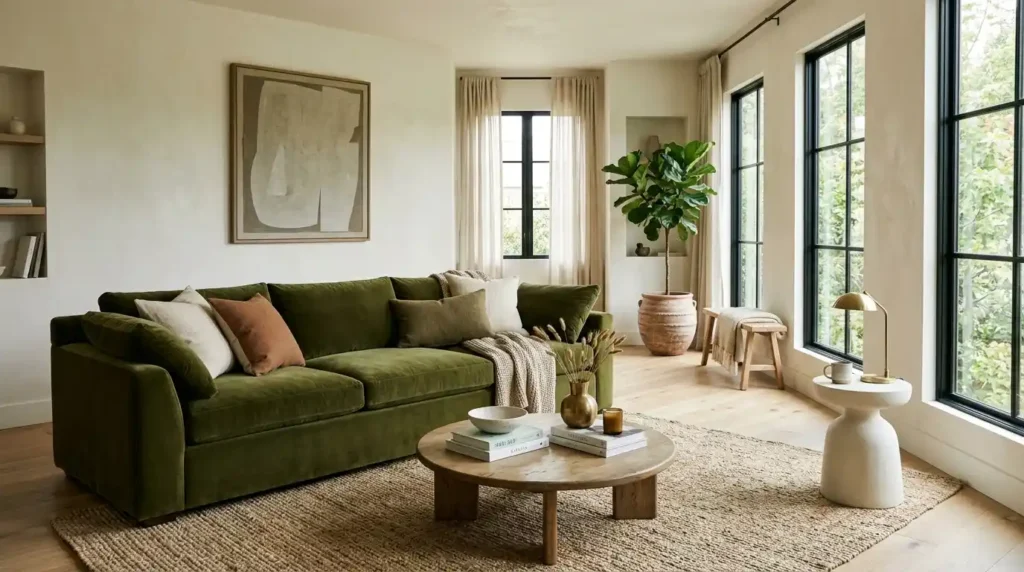
Pay Attention To Materials
Next, pay attention to materials. If you have children, pets, or both at home, select fabrics that are durable. Consider wear-resistant performance weaves, tight-weave linen, or even leather that gets better with age. These types of materials will act as an invisible layer of protection for your investment, keeping it from getting ruined in the first year alone.
Finally, colors are something that deserve special consideration. Grays, aged white, olive – these are colors that will make sure your sofa will continue to look great many years down the road. Trendy colors will be the equivalent of a RO membrane that’s not chosen correctly perfectly fine until you find yourself replacing them earlier than expected.
Layered Lighting Is the Single Most Underrated Design Decision
The majority of living rooms only have one source of overhead lighting, and it’s painfully obvious. One central ceiling fixture in the middle of a room is equivalent to an entire water filtration system for the home being reduced to a single carbon block filter with nothing but raw water going into it and no UV treatment following up.
Living Room Lighting Should Be Three Fold.
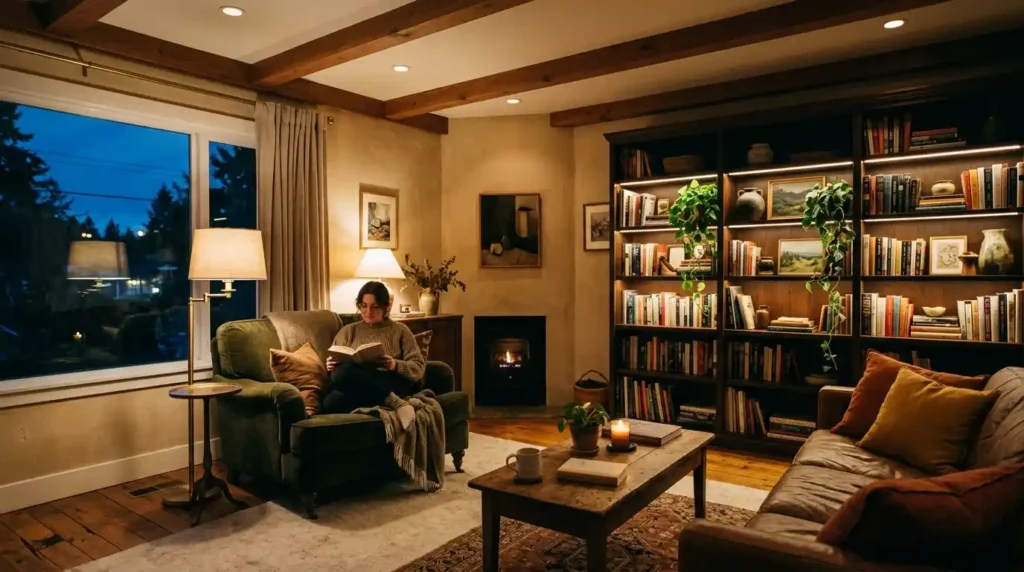
The Case for Negative Space: Not Every Surface Needs Something on It
There seems to be a habit, particularly in first homes, of filling up every inch of space available. This happens because shelves fill up with stuff, walls are filled with art and decor, even corners get decorated with furniture. It only makes sense because emptiness feels incomplete as though an uncommissioned system is at play. Yet negative space is what allows for room to exist.
Consider those living rooms you have loved being in. You will notice they are probably not the most full rooms. Rather, they are those that had room for objects. Those that allowed one single thing to be in its own space. Whether that was a lamp left alone on a desk as opposed to five other things on it or a potted plant having space on the ground to stand out, or a sofa which has some room to breathe.
A good criterion for deciding what you need to get rid of in your room is whether the absence of an object improves or worsens your environment. In the same way that the presence of a TDS meter will show you what’s really in your water rather than what you think is there.
Texture and Material Mixing Is What Makes a Room Feel Expensive
Those rooms which appear effortlessly stylish those rooms which get saved and shared because of their design aesthetic have almost always been the outcome of sourcing pieces not from the same store or even from the same material palette.
Hard against soft. Rough against smooth. Textured against smooth. Organic against industrial. Such juxtapositions act like a layered process of filtering. Where each layer plays a specific role in creating the final quality of the output.
It could be a concrete or stone coffee table set next to a luxurious deep-pile rug. And it could be a linen curtain hung near a metal light fixture. It could be a rough wooden shelf displaying delicate ceramics. Or simply a soft velvet cushion on a firm leather sofa. Each of these combinations may seem rather simple, yet each of them adds an element of material dialogue into the space.
Naturally produced products, especially wood, stone, linen, rattan, and wool, have a high tendency to weather well and fit into more design environments than artificially made ones. They are like those parts of a water system that are made in America and can last for about 15 to 20 years.
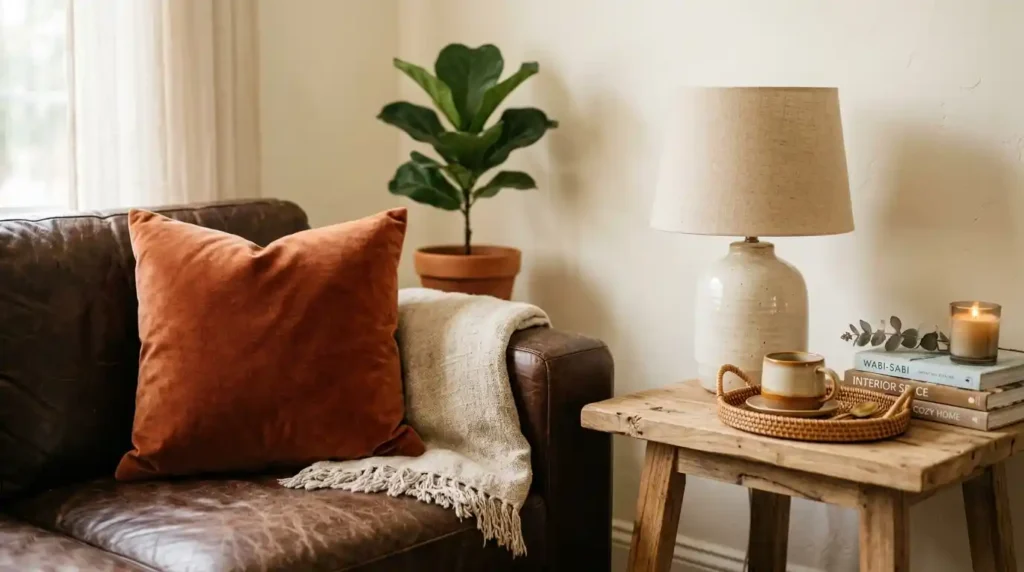
Color Strategy: How to Choose Without Getting It Wrong
The other area people tend to overplay safe cards or commit too much energy and resources in the same vein is color. Both extremes can be costly, and time consuming to correct.
A simple guideline for choosing colors is to follow the 60/30/10 ratio. The 60 being the primary color scheme in your room; 30 being the second color that compliments it; and 10 being the color which will give your room its own character. You’ll still have enough flexibility within those numbers while keeping all of your colors balanced and cohesive.
Generally speaking, warm neutrals like aged whites, creamy off whites, warm taupe, soft terracotta work better in the living rooms than cool grays just for the fact that living rooms are designed to look lived-in and warmer in general. The cool neutrals tend to require perfect lighting situations.
Colors are best left for the 10%; such as a vibrant vase in your favorite color, or a throw pillow in mustard yellow or red; or an original artwork in rich, deep colors.
Furniture Arrangement: The Mistakes Everyone Makes
The two most frequent mistakes made when arranging living room furniture include the placement of all furniture pieces against the walls and the creation of arrangements around the television screen as if it were the sole focal point of the entire space.
Moving furniture out from against the wall by just a couple of inches helps in making a room appear bigger and more deliberate. This shows that there was some thought behind this arrangement, and the setup was not just done automatically.
The arrangement around screens is understandable, yet it limits the room. Instead, it is preferable to start with an arrangement around conversation: creating an arrangement of seats that allows people to talk to one another easily. Screens should be included afterward. Rooms arranged around a television screen are passive, while those arranged around conversations are lively.
Plants, Art, and the Things That Make It Yours
It doesn’t matter how well-furnished your room is, or how carefully thought out the lighting. What makes a room unique is the stuff you find there that means something to you, that needs your care and attention, that mirrors your life.
And this is where you’re making a grave error. You think you are decorating. You are not decorating; you are accumulating evidence. Living rooms lacking evidence of the lives lived within them are showrooms, which are fine places to visit, but terrible places to live.
The best kind of living room is one that’s been pared down to essentials where everything is there for a reason and the totality creates more clarity than any individual element could do alone. Because, in the end, that is the true purpose of a living room. It isn’t about design, it’s about creating a space that reflects those who occupy it.
Conclusion
Creating an excellent living room takes time and rightfully so. This happens step by step, eliminating everything that should not be there in the end, leaving only those elements that make this living room feel like your own. You start with function; you add layers; you mercilessly edit, and you know when the room tells you that it is ready. Because the aim was not perfection but simply a comfortable and clear place for you to go back to.
Frequently Asked Questions (FAQ’s)
Start by deciding how the living room will actually be used, such as for family time, reading, entertaining guests, or conversation. Once its purpose is clear, furniture, lighting, and décor choices become much easier.
Warm neutrals such as creamy whites, taupe, and soft terracotta generally create a more comfortable, lived-in atmosphere. Cool grays can work well, but they tend to depend more heavily on good lighting.
Use layered lighting, varied textures, natural materials, and a few meaningful accessories while leaving some surfaces and corners intentionally open. Negative space gives important furniture and décor room to stand out.
A conversation-focused layout usually makes the room feel more welcoming and social. Arrange seating so people can interact comfortably, then incorporate the television without allowing it to control the entire layout.
Begin with an anchor piece such as the sofa, fireplace, artwork, or an important architectural feature. Choose something proportionate to the room and, for busy households, favor durable materials that can handle everyday wear.

19 thoughts on “Ideas for Designing a Living Room That Feels Like Home — Expert Tips by KD Architects”