
For the better part of two years, my living room was my no-go area. The problem with the lounge was the design which had all the elements working against its appeal; the floor plan was off, the furniture was too big, and everything felt like one long passage. The situation didn’t improve until I hired an interior designer for whom the lightbulb switched on in the process.
When creating lounge designs that make sense, you need to understand how people move in spaces, how the lighting affects the room, and how decisions regarding individual furniture arrangements contribute to the overall atmosphere of the lounge. The following guide takes into account all aspects of lounge interior ideas including basics of living room floor plans and ideas of interior decoration.
Start With the Layout Before Anything Else
Perhaps the biggest error that individuals commit while considering interior design ideas for their lounge area is going shopping without first resolving the problem of arrangement. A luxurious velvet sofa placed improperly can ruin the whole space more than an ordinary sofa placed properly ever could. It is important to know your room’s size and traffic flow pattern prior to buying anything.
Zones form the key ingredient of any effective living room interior, whether you are designing for a tiny apartment, a generously spacious open plan, or even a narrow living room that seems more like a hallway. Marina V. Umali, principal designer and owner of Marina V Design Studio based in New Jersey, sums up the process very neatly: zone your living space, arrange seating around those zones, and the result will be more practical and aesthetically pleasing all at once.
The same can be said for narrow layouts that resemble the design of railroads, such as the layout mentioned in Apartment Therapy by Heather Bien. She talks about an apartment whose living room had a width of 12 feet and a length of 24 feet. One would think that the only way to organize all the furniture components would be to arrange them along the perimeter of the room and leave only one path through the center. However, avoid doing this. Instead of forming a hallway between two rows of furniture pieces placed against the wall, position some of them in the center of the room.
Zone Your Lounge Like a Professional
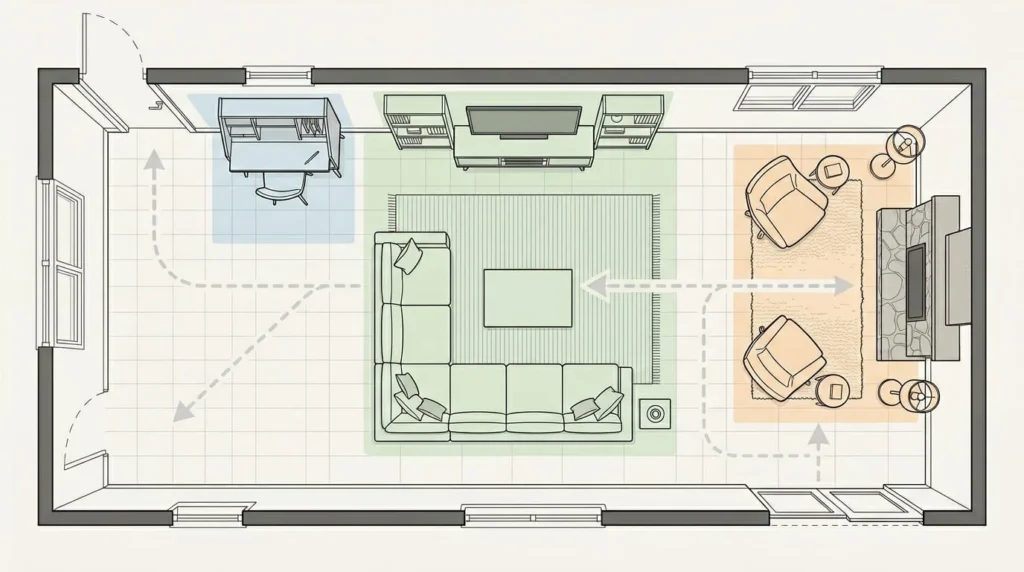
Now that the living room layout has been set, consider how many separate zones the living room will have and what their purposes will be.
Open Living Room Or A Long Living Room
An efficiently designed open living room or a long living room arrangement could easily accommodate three separate conversation zones a work zone featuring a secretary table with a chair for working from home, a hang-out zone with a leather chair and sofa and a wall-mounted television, and a relaxation zone with swivel chairs or armchairs set up around a fireplace. All the zones must complement each other using the same colors and materials.
Layered rugs form a great zoning method which does not involve the creation of physical walls. Heather Bien applied this idea by installing a foundation area rug all throughout the floor space to establish an even backdrop, after which she added a vintage area rug above to define a distinct seating zone in the middle of the room.
Another useful zoning method when you have a U-shaped seating configuration, especially in cases where you are working with a railroad apartment or a narrow living room, is the placement of a three-seater sofa along one wall, a loveseat along another wall, and finally, a bench along a third wall. This creates an enclosed conversation zone which is cozy enough. A small round coffee table in the center helps keep the traffic flow open.
Choosing Furniture That Actually Fits the Space
Furniture scale is the detail that separates a lounge design that looks polished from one that just looks busy. The principle is simple: choose pieces with a slim profile that offer visual space without sacrificing comfort. Umali is clear on this avoid anything too bulky that fills the visual field without purpose.
Nesting Tables
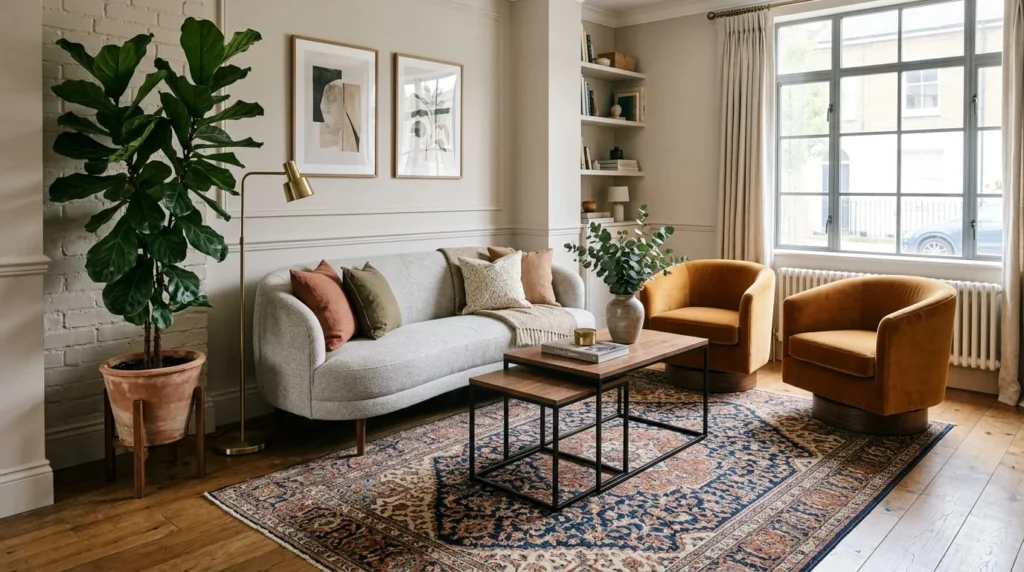
Nesting tables deserve far more credit than they typically receive as a lounge interior ideas. Unlike a standard coffee table, nesting tables can be arranged to create an elongated surface for a dinner or gathering, then collapsed back to compact size to keep floor space free on normal evenings. In smaller or narrow living room settings, this single choice can meaningfully reduce the feeling of clearance pressure between furniture and walls the difference between a room that breathes and one that does not.
TV Wall Placement
A curvy sofa as opposed to a boxy, right-angled one improves traffic flow in irregular rooms. The rounded silhouette guides movement rather than blocking it. Combined with a console table placed behind the sofa as a demilune entry table or display surface, it creates a layout that is both functional and visually sophisticated.
The TV wall placement matters enormously here. The ideal distance between a screen and your seating zone is 1.5 to 2.5 times the screen size for a 50-inch TV, that works out to approximately 10 feet. Placing your sofa first and then remounting your TV to suit that position produces a dramatically better result than the reverse.
The fireplace wall should not be overlooked just because it serves an important purpose. Taking away the television that sits over the fireplace to put up wall art or even a mirror creates room for the fireplace to be the focus of the room.
Color Palette and Paint Color Decisions
Paint color is where lounge interior ideas become genuinely personal and where the most common mistakes happen. The most important principle, drawn directly from Farrow and Ball’s living room guidance, is that color palette and color scheme decisions should be made in the actual room, under the actual light conditions, before committing to a full wall application.
Dark Tones
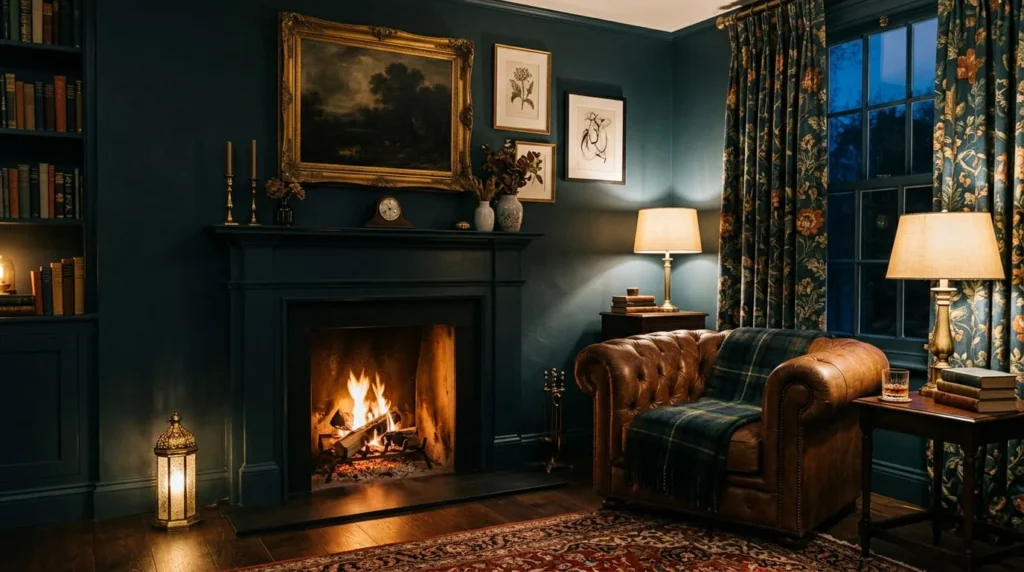
Dark tones such as Hague Blue No.30, Studio Green No.93, Down Pipe No.26, Railings No.31, and Paean Black No.294 will add an intense moodiness to your living room that works best when the sun goes down. Farrow and Ball advise using contrasting colors of equal intensity on walls and ceiling, or even extending a dark color from one room to the other in an open space layout. Inchyra Blue No.289, London Clay No.244, Tanner’s Brown No.255, and Hopper Head No.305 are all great choices for creating an ambiance that’s rich and full yet does not oppress.
Light Tones
When designing for a relaxing atmosphere, choose colors that will calm and soothe the mind. The powdery hues of Pink Ground No.202, Parma Gray No.27, Borrowed Light No.235, School House White No.291, Ammonite No.274, Skimming Stone No.241, and Setting Plaster No.231 are all perfect colors for creating a tranquil place for rejuvenation in your lounge. To achieve the look of higher ceilings and increase the verticality of your living room, use color drenching by painting the chair rails and even the baseboards of your walls.
Natural Tones
Earthy hues such as Jitney No.293, Red Earth No.64, and London Clay No.244 link a lounge design with natural tones and textures, something that neutral tones alone simply cannot do. Use these colors in combination with texture components such as natural textures, patterned draperies, woven carpeting, and wood furnishings and you will create a rich, textured ambiance that is not only photo-friendly but even more impressive in person.
Wallpapers
In terms of wallpaper applications, consider Farrow and Ball’s Hegemone BP 5705. This beautiful wallpaper shows how well a floral wall can be used within the interior design of a living room space to create an exterior-inspired ambiance by introducing botanical motifs into a background of greys and off-whites. The richness and texture that quality wallpaper can provide to a lounge wall is truly hard to duplicate using paint.
Lighting, Accessories, and Focal Points
What separates a lounge design that looks complete from one that seems to be more furniture showroom than relaxation space can be traced back to the choice of accessories and lighting.
Living Room Ambient Lighting
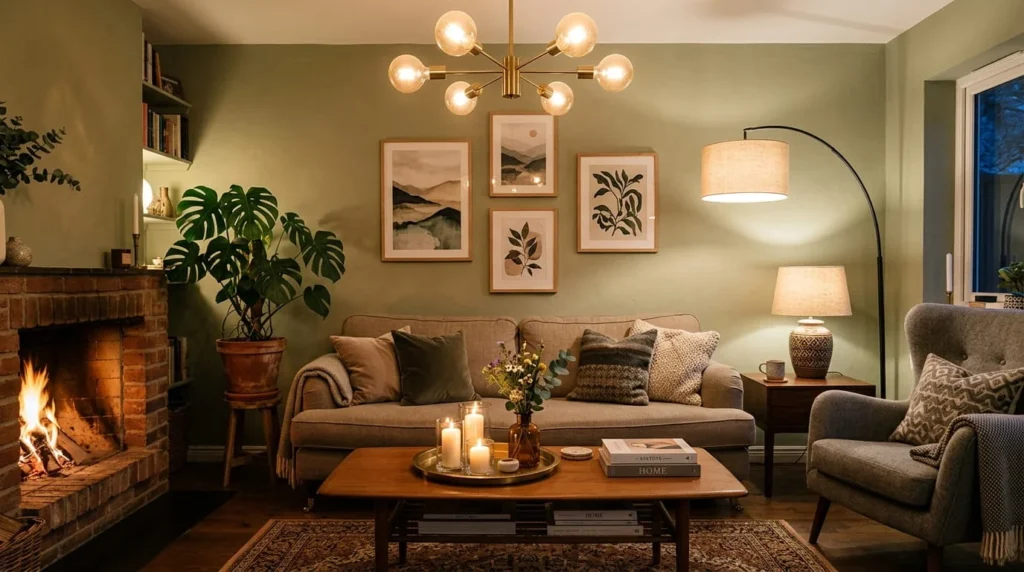
Living room ambient lighting must come from various heights from a floor lamp, from a side table, from above by means of a traditional or modern chandelier if ceiling heights allow. This will provide an array of lighting which will avoid the harshness of a single source overhead light while also adding depth to the room’s atmosphere to create the warm ambiance which allows for full relaxation.
Wall Decor
Wall decor placed at eye level, in other words, not centered on the wall but rather based on the furniture arrangement beneath it, anchors a particular zone within a room. Relaxation zone wall art should take up enough room at the focal point in the space, namely the fireplace. A work that is too large for the space will feel misplaced, whereas something that fills the space appropriately does not.
Wall Art
Wall art positioned at eye level not centered on a wall, but anchored to the furniture below it grounds the furniture arrangement and adds visual weight to the zone it occupies. Framed art in a relaxing zone in front of the fireplace should be sized to fill the space comfortably. A piece that is too small floats awkwardly; one that fills the width of the fireplace surround feels intentional.
Indoor plants and botanical touches deserve a specific and deliberate placement decision in any lounge interior ideas.
A houseplant of genuine scale tall enough to draw the eye upward placed in a corner of a narrow living room pulls visual weight upward and makes the room feel larger. Umali specifically recommends placing tall artwork or indoor plants to draw the eye upward in a long living room the effect is immediate and requires no structural intervention.
Detailing in Chinoiserie style on the secretary desk, stained glass lighting next to the armchair, a thoughtfully selected vintage carpet with a contrasting design these are some of the ideas for lounge decor that will define the character of the space. No two rooms painted in the same color scheme and featuring the same sofas will look alike, if accessorized differently. It’s well worth doing intentionally, not by accident.
Visual Cohesion: The Detail That Ties Everything Together
A lounge design where each zone works well but feels disconnected from the others is not a finished room it is a collection of furniture. Visual cohesion is what converts individual zones into a unified living room design that feels intentional from every angle.
Umali Frames
Umali frames it simply: stay within a similar color palette and material choice for the entire lounge, and the space will feel whole. This does not mean every piece must match. A dusty, muted tones approach repeated through patterned curtains, an area rug, throw pillows, and wall art in compatible tones creates the kind of cohesive feeling that makes a room feel designed rather than assembled.
Consistency within the color palette also applies to the furniture zones regardless of the differences among the pieces used. For instance, a gray velvet couch in the hangout zone and leather chairs in the reading zone, which is located in the far end of the same space.
Can still be harmoniously incorporated together as long as there is an element of warmth associated with leather and velvet even though their textures may be very different from one another. The introduction of an accent color, say hunter green cushions on both seats, can tie the zones together.
Finally, there is the perspective you have when looking through the entry. Prior to settling on how the living room should be arranged and what kind of furniture should go in the space, stand in front of the entry and take a look at your living room. This is what any guest entering your living room will see and what you will see whenever you walk into the room.
Whatever the lounge interior ideas concept for your living room is whether cozy and mysterious, bright and airy, serene and neutral, or striking and individualistic it must be evident from the very first glance through the entry.
Conclusion
When creating a great lounge interior ideas, do not rely on luck. Instead, try understanding your room first. First of all, analyze the layout of your living room. Figure out the movement around the room and create functional zones. Next, come up with a color scheme based on the lighting of your room. Add furniture pieces that will create the right atmosphere. Choose the appropriate lighting fixtures that will emphasize all the elements of your lounge design.
Finally, create a personal touch by adding artwork to the walls, greenery to the corners, and small decorative objects that will complete the look of your lounge. Regardless of whether you prefer Hague Blue and Studio Green, or you are looking for a more soothing mood created by such colors as Setting Plaster and Borrowed Light, or the coziness of earthy tones and natural texture, the concept remains one and the same. For a good design, you need a common atmosphere that all the selected elements must emphasize.
Frequently Asked Questions (FAQ’s)
Lounge interior ideas focus on designing a comfortable, functional, and visually balanced living space by combining layout, furniture, lighting, colors, and decoration. They help create a lounge that feels organized and matches how people use the room.
A small lounge design usually focuses on saving space with properly scaled furniture and smart layouts, while an open living room design often uses different zones for activities like relaxing, working, and entertaining. Both approaches depend on good planning and clear traffic flow.
Choose furniture based on your lounge size, movement patterns, and comfort needs rather than appearance alone. Slim-profile pieces, nesting tables, and correctly positioned seating can make the room feel more spacious and practical.
The best lounge colors depend on the mood you want to create and the natural light available in the room. Dark tones can add depth and drama, while lighter and natural shades can create a calmer and more relaxing atmosphere.
Start with the layout, then focus on changes that have the biggest visual impact, such as lighting, wall decor, plants, and carefully chosen accessories. A well-planned arrangement can improve the room without requiring expensive furniture replacements.

9 thoughts on “Lounge Interior Ideas by KD Architects: The Complete Guide to Designing a Living Room You’ll Love”