
A neighbor of mine got three renovation quotes last year that ranged from $28,000 to $61,000 for what was, on paper, the same kitchen. Same square footage, same rough scope. The gap wasn’t dishonesty it was three contractors pricing labor, material tiers, and contingency completely differently, and nobody explaining why until she asked directly. That’s the real problem with most home renovation service pricing conversations: the numbers you see online are real, but they’re averages stripped of the context that actually explains your specific quote. Here’s what’s actually driving renovation costs in 2026, and how to read a quote without getting blindsided by it.
Renovation and Remodeling Aren’t the Same Word
Before pricing anything, it’s worth knowing which one you’re actually planning, because the distinction changes your permit requirements, your contractor selection, and your budget entirely.
Remodeling means changing the structure itself knocking out walls, converting a garage into a livable space, altering the layout. Renovation means updating what’s already there without changing the bones new flooring, updated fixtures, a repainted exterior. A home renovation service handling a simple cosmetic update doesn’t need the same permits, the same structural engineer, or the same contractor expertise as a full remodel involving load-bearing walls.
This matters because a lot of sticker shock comes from people budgeting for renovation prices while their contractor is quoting remodel-level work, or vice versa. Get clear on which one you’re actually doing before you request your first quote.
Why Your Quote Looks Nothing Like the National Average
Search for renovation costs and you’ll find a national average hovering somewhere in the $50,000-plus range. That number is real, and it’s also nearly useless for budgeting your specific project, since it blends tiny cosmetic updates with full home overhauls across every region in the country.
More useful: per-square-foot pricing. A minimal cosmetic refresh runs roughly $15 per square foot, while high-end finishes push toward $150 per square foot. Most homeowners land somewhere in the $60 to $100 per square foot range for a standard, non-luxury renovation a far more actionable number than any single national average.
Room type matters just as much as square footage. Anything involving plumbing costs meaningfully more than dry rooms, which is why kitchens and bathrooms consistently top the price list kitchens can run anywhere from $25,000 to well over $100,000 depending on cabinetry, appliances, and finish level, while bathroom renovations typically start around $10,000 and climb sharply from there based on fixture count and complexity.
Region matters too, more than most people budget for. The same renovation scope can vary by tens of thousands of dollars depending on local labor rates and material delivery costs a reason to treat any national number as a starting point for research, not an actual estimate for your specific house.
A Budget Process That Actually Holds Up
The homeowners who come out of a renovation without a budget blowup tend to follow a similar sequence, roughly in this order: define your scope of work clearly before contacting anyone, get a rough sense of permit costs from your local building department, collect at least three contractor quotes for genuine comparison rather than accepting the first one, add contingency on top of whatever number you land on, and only then finalize your budget before signing anything.
A few line items get missed constantly and shouldn’t be: permit and inspection fees, designer or engineer fees (sometimes flat, sometimes a percentage of total cost), and for larger projects requiring you to vacate the home alternative living costs that can run into the thousands depending on project length. None of these are exotic expenses. They’re just easy to forget until they show up as a surprise mid-project.
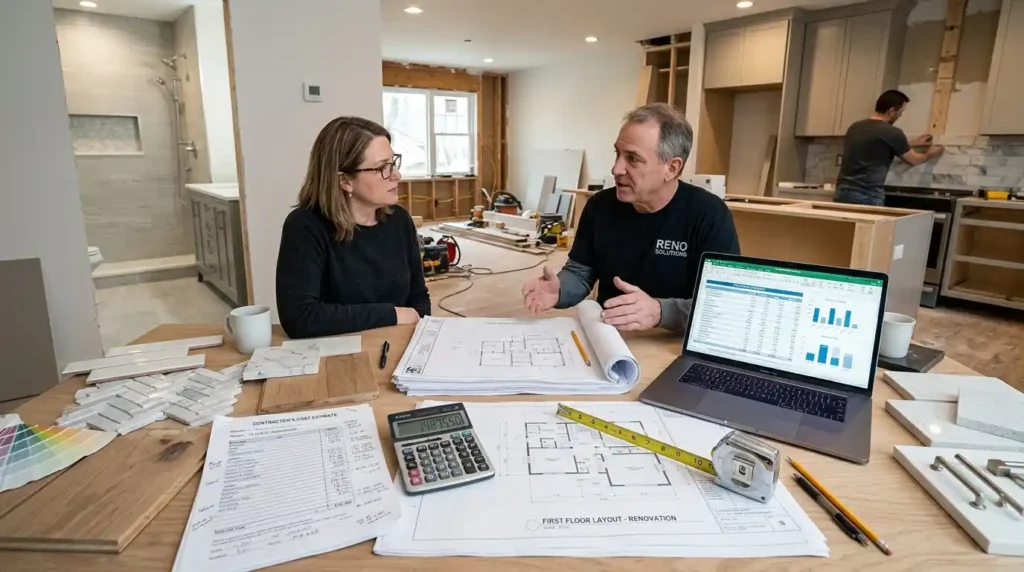
Labor Is the Line Item Nobody Budgets Enough For
If there’s one thing worth internalizing before your first contractor meeting, it’s this: labor, not materials, is what’s driving most renovation budgets higher right now. Skilled trade shortages have pushed labor costs up across nearly every category of home renovation service, from general contracting down to individual electrical and plumbing work.
A general contractor typically charges somewhere between $50 and $150 an hour depending on experience and location. Specialized trades run higher still plumbers in particular often command a premium over general labor rates given how specialized and licensed the work is. When you’re comparing quotes, ask specifically what portion is labor versus materials; a lowball quote that seems too good is often cutting corners on licensed, insured labor rather than finding a genuine deal.
If you hire a general contractor to manage the whole project rather than coordinating tradespeople yourself, expect roughly 20 to 40 percent of your total project cost to go toward that coordination and management. That’s a real cost worth discussing upfront in your budget conversation, not something that should surprise you on the final invoice.
The Hidden Premium on Older Homes
If your house predates the 1990s, budget for surprises because they’re not really surprises, they’re a predictable pattern. Older homes routinely carry meaningfully higher renovation costs than newer construction, driven by whatever’s hiding behind the walls: outdated wiring that can’t handle modern electrical load, plumbing that needs full replacement rather than repair, insulation that’s simply inadequate or missing entirely.
This is exactly why a healthy contingency fund isn’t optional caution it’s a realistic budget line. Most renovation planning guides recommend somewhere around 15 to 20 percent contingency for standard projects, and pushing that closer to 20 to 30 percent for older homes or anything where structural surprises are a real possibility once walls open up.
Financing and Incentives Change Fast Verify Before You Budget Around Them
If you’re financing rather than paying cash, home equity loans, HELOCs, and construction loans are the most common routes, and the smartest approach is structuring payments so your monthly budget doesn’t increase once the work is actually finished an easy detail to overlook when you’re focused on the total project cost rather than the monthly math.
One important caution: energy-efficiency tax incentives and rebate programs change frequently, and outdated blog content is a common source of bad budgeting assumptions here. Don’t build your numbers around an incentive you read about somewhere without confirming directly with a current, official source that it’s still active for the year you’re renovating in. Even without a specific tax credit currently available, energy-related upgrades still carry real value through comfort, humidity control, and future resale appeal just budget for them as investments in the house itself rather than counting on a rebate that may no longer exist by the time your project wraps.
What Actually Separates a Good Renovation Decision From a Bad One
The best-value projects tend to share three traits: they fix something genuinely visible or functionally broken, they improve safety or usability, and they match what buyers in your specific neighborhood actually expect if resale is part of your thinking. If you’re planning to stay long-term, “value” shifts toward your own comfort kitchen functionality, bathroom space, insulation quality rather than curb appeal for a future buyer.
For a deeper breakdown of exact per-room and per-region pricing, this detailed home renovation cost guide walks through specific project examples in more granular detail than fits here.
Conclusion
Choosing the right home renovation service in 2026 comes down to three things that have nothing to do with a contractor’s portfolio: starting from a clear problem statement rather than inspiration photos, budgeting with the understanding that labor now makes up the majority of most renovation dollars, and building in real contingency rather than hoping nothing unexpected turns up once the walls open. Get three real quotes, ask what’s included versus billed separately, and treat your renovation as the significant financial decision it actually is not just a design project.
Frequently Asked Questions (FAQ’s)
Home renovation services can cover repairs and upgrades such as kitchens, bathrooms, flooring, plumbing, electrical work, insulation, and other improvements to an existing structure. The exact scope depends on the condition of the home and the problems the renovation needs to solve.
Renovation mainly improves or repairs an existing space, while remodeling changes its layout or structure. Remodeling often involves more extensive construction, permits, and specialist trades, so it usually requires a larger budget.
Costs vary widely by project size, location, materials, and property condition, with standard renovations commonly running about $60 to $100 per square foot. Kitchens and bathrooms generally cost more because they involve plumbing, fixtures, appliances, and additional skilled labor.
Define the full scope first, check permit costs, compare at least three contractor quotes, and add a 15% to 20% contingency for unexpected expenses. Older properties may need a larger reserve because hidden plumbing, electrical, or structural problems often appear once work begins.
A general contractor makes sense when a renovation involves several trades, structural changes, or significant coordination between plumbing, electrical, and construction work. The added management cost can save homeowners from having to schedule and supervise multiple subcontractors themselves.

3 thoughts on “Home Renovation Service Costs in 2026: What the Budget Numbers Actually Mean for Your Project”